Raising confident kids is a stupendous task for a parent. In fact few of us ever realize that our little bundle of joy is a master of his own domain rather he thinks himself to be as big and powerful as we are. His supremacy is a casualty in the process of development. The scrutiny of elders, the faultfinding and evaluation by others shakes the foundation of his confidence. He begins to question his power unless we show him the way to face failures and allow him to make mistakes. Why does this happen? It happens because all of us have very strong need to belong and seek approval of others. The child learns to depend on outside evaluation to assess his own performance, measure his self-worth, and shape his future choices.How many of us realize this and better still how many of us really know how to counteract it? Not many. Failure phobias kill the creative and innovative abilities of children. It also leads to their becoming under-achievers or perfectionists, that is, either they will not choose for fear of failure or they will choose in accordance with highest social standards. Both the conditions are not healthy for the child. What is our duty as apparent? The onus of preparing our children to learn from their mistakes lies on us. They can turn their mistakes into opportunities of learning if the parents pay a little heed to their own conduct:
1. Never punish your children for misbehavior by denying them doing something they are good at. For example, your little one excels in painting but messes the paint around while doing so. Now don't try to discipline the child by admonishing her and not allowing her to paint for sometime.
2. Show your children the path of progress and success in mistakes. If your child is trying to put on the socks do not intervene unless he is beleaguered by it. Appreciate the effort and the extent of correct performance.
3. Do not admonish yourself for the mistakes committed rather take positive steps to start afresh and control the damage caused.
4. Do not broach the past mistakes time and again.
5. Never compare your children with others or one sibling with another.
6. Teach the children that success is buried in failures.
7. Do not ridicule anybody for mistakes.
8. Increase the Failure Tolerance of your child by restraining your reactions to their mistakes. Welcome what has been performed well rather than criticize the child for failing.
9. Appreciate the power of struggling for imparting strength and compassion. This makes the children humane. They discover their abilities to overcome failures.
10. Target the behavior ( undesirable) rather than the child. Developing a sense of right or wrong is important for then they will not fall prey to peer pressures which include substance abuse, promiscuity, deteriorating academics, gang involvement, low self-esteem, lack of creativity, irresponsibility, and other commonplace problems. Those who aren't rewarded with the approval they seek, there's frustration, anger, cynicism, apathy, depression, rebellion, aggressive or violent behavior, and so on.When we allow them to make mistakes they are willing to take risks, learn new skills and explore the unknown. The skills and abilities they inevitably gain then leads to a strong sense of independence.
Monday, September 7, 2009

Saturday, May 9, 2009
Aromatherapy for stress management
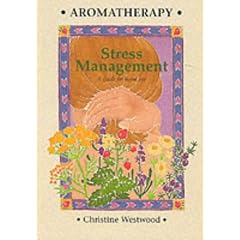 Did you know that the Egyptians were among the first to discover that oils extracted from plants can be used for both medical and cosmetic purposes? Maybe these oils were even used for embalming purposes – a technique about which very little is known!
Greeks, Romans and the Chinese have used aromatherapy extensively for luxuriously scented baths, for elaborate massage using these lovely scented oils and for religious purposes like making the incense used in ceremonies (particularly the Chinese). When the French perfumier Gattefosse accidentally discovered the lavender aromatic oil which healed his burned hand, he came up with a book on aromatic oils which has lent its name to aromatherapy.
How the oils act
Basically aromatherapy oils are used as a soothing element – they help in soothing both body and mind and the oils for this are all extracted from plants flowers, roots, bark and seeds. These oils can be used either diluted or undiluted for a soothing effect. The oils enter the bloodstream when gently massaged, and they react with the hormones and the natural enzymes of the body producing the desired effect and relaxing the body.These oils are known to have extremely beneficial effects on the skin and actually help when the skin is inflamed or when there are unexplained aches and pains. It is also a known cure for stress related problems, post delivery problems and many other conditions. These oils can be used in a spa or at home.
Aroma oils are today synthetically produced and blended for effect and are known to be equally effective as cures.
Use them in your bath for healing the skin and relaxing the body.
Oil diffusers are a great way of spreading the healing smell throughout the room. You can also use them in a spray.
Learn about the properties of each oil before you decide to use them. See if they address your particular need.
No one knows how exactly these oils act on the body but the fact that they do and have done so over ages, and also have beneficial effects cannot be denied. So if you need a sweet smelling quick fix after a tired day at office, just rub the aroma oil or run it in your bath and heal yourself.
Thursday, May 7, 2009
HEALTH AND HYGEINE OF YOUR YOUNG ONES

It is very important for your child to take him to the doctor for regular check-ups who can regularly maintain a chart of his growth and development apart from giving regular immunisations. Also, this will help to tackle any health problem which surfaces and deal with it before it worsens.
Some major issues are discussed below-
Immunisation: Babies should be immunised against serious infectious diseases, whooping cold, mumps, measles, etc. The all-important DPT (diphtheria, Polio and Typhoid) vaccine should be given at the stipulated time period. These days government is majorly focussing on health issues of the child and organises Polio camps where drops are given free of cost. Similarly, other such campaigns like for eyes, dental care, etc are held from time to time and are advertised widely all over. Your baby will be given the majority of vaccines during the first year as the baby is more prone to such infections and they are much more severe in younger babies than in older ones. It is important to keep a proper record of dates of your child's immunisations.
Common illnesses: Listen to your toddler when she speaks. A smile or a nod from you will encourage her struggles. Stammering at three years is considered a normal stage in speech development. Trying too hard to correct the toddler's speech may make him self-conscious and frustrated. They often talk too loudly. Sometimes, they go on a spree of name-calling and experimenting with nonsensical singsongs. Just keep smiling and nodding. However, if you feel that she is confused with words and is fumbling to express herself, you need to ask her to think first and then tell what she wants.The common cold seems to be the favourite of this group. It is often accompanied by fever and ends in a running nose and night cough. A child may also become irritable during this time and would need special care and more pampering. However, if they are too frequent, they can end in bronchitis or ear infections. Hence, a visit to a doctor is must. Constipation is another errant when a child does not get enough roughage through fruits, vegetables or cereals. Opposite to this condition is diarrhoea or vomiting caused by too much sugar, too much liquid or too much concentrated solutions.
Oral care: Making your child brush her teeth properly is another cause of concern for some parents. " Toothbrush at two, the dentist at three," is a rule that encourages good habits. Around two years of age, your child will curiously watch you brushing your teeth. This is the right time to handle him her toothbrush and let her try. The most important brushing is after the evening meal. The child may also complain of any kind of eye problem or irritation in this age group. The muscles of the eyes can be weak and require treatment. Some children may have poor or weak eyesight too may be through a genetic cause. It needs to be checked and require proper treatment.
Toilet training: Training the child to control defecation and urination is a difficult task which heavily depends upon the development of the nerves and muscles involved. The stubborn child may resorts to aggressive behaviour if is forcefully trained. Training can be accomplished, and if it is being done daily with the cooperation of a child. Successful training is not achieved all at once. It is a matter of trial and error both for the child and the parent. As a beginning one or two sessions a day are enough. As a rule, most toddlers will learn to control their bowels naturally with time.
Tuesday, April 28, 2009
Release your Tension
Exercise for at least 20 minutes a day
Warm Cooked food like soups and stews support digestion and increase energy. Take time to enjoy your food. Don’t rush or multi-task.
Slumped shoulders and a bent spine can actually, to some extent, induce moodiness. Tensed stomach muscles can – again, to some extent – induce mental anxiety… As physical tensions can induce, as well as reinforce, mental tensions, so physical relaxation can bring serenity to a worried mind.
Even if you know you are late, don’t allow yourself to rush – as this will make you tense. You can help yourself by beginning each activity, such as driving, speaking at a meeting, or walking to your commuter train, with one gentle inhalation, followed by a calm exhalation.
Take a warm bath. Focus on how the water eases the pain in your muscles, and the sensation of tension draining out of your body.
Deep breathing can reduce stress and increase relaxation.
Participate in activities that leave you with a sense of relaxation and peacefulness.
Physical activities have a built-in relaxation response, such as yoga or taichi.
Pray or Meditate. Studies have shown that mindfulness meditation can reduce pain, and that prayer can effect healing.
Rediscover your hobbies. When was the last time you did something purely because you liked it? Be it painting, reading, stitching, walking, sports, pottery, craft activities, swimming, gardening, cooking, music, playing on instrument – just do it, at lease once a week.
Subscribe to:
Posts (Atom)
